
AI Tutor: How AI-Powered Tutoring Works, What It Costs, and How to Choose One
An AI tutor is a learning assistant powered by large language models that explains any subject in plain language, helps with homework step by step, quizzes you, and adapts to your pace — the kind of on-demand help available 24/7, without booking an appointment. Research on one-on-one instruction has long shown that a tutor who asks questions and guides your thinking improves learning, and AI now makes that style of help available to anyone with a phone or laptop.
This guide explains what an AI tutor is, how it works, what it can (and can’t) do, how much it costs, how it compares to a human tutor, and how to pick one that actually helps you learn.

What Is an AI Tutor?
An AI tutor is a chat-based tutor built on large language models — the same technology behind ChatGPT and Gemini — that gives personalized, one-on-one help across school and college subjects. It is the modern, conversational form of an intelligent tutoring system, a category of software designed to adapt instruction to each individual learner rather than teach an entire class the same way. AI tutoring products serve learners from elementary school through college and adult education, across math, science, English, physics, coding, and more.
Unlike a generic chatbot, a good AI tutor is designed to teach rather than just answer. It asks questions, checks understanding, and gives hints — closer to how a real tutor works in a one-on-one session than to a search engine that hands over a finished answer. That distinction is what separates an AI tutoring system from a plain AI-powered tutor chatbot that only autocompletes a response.
How Does an AI Tutor Work?
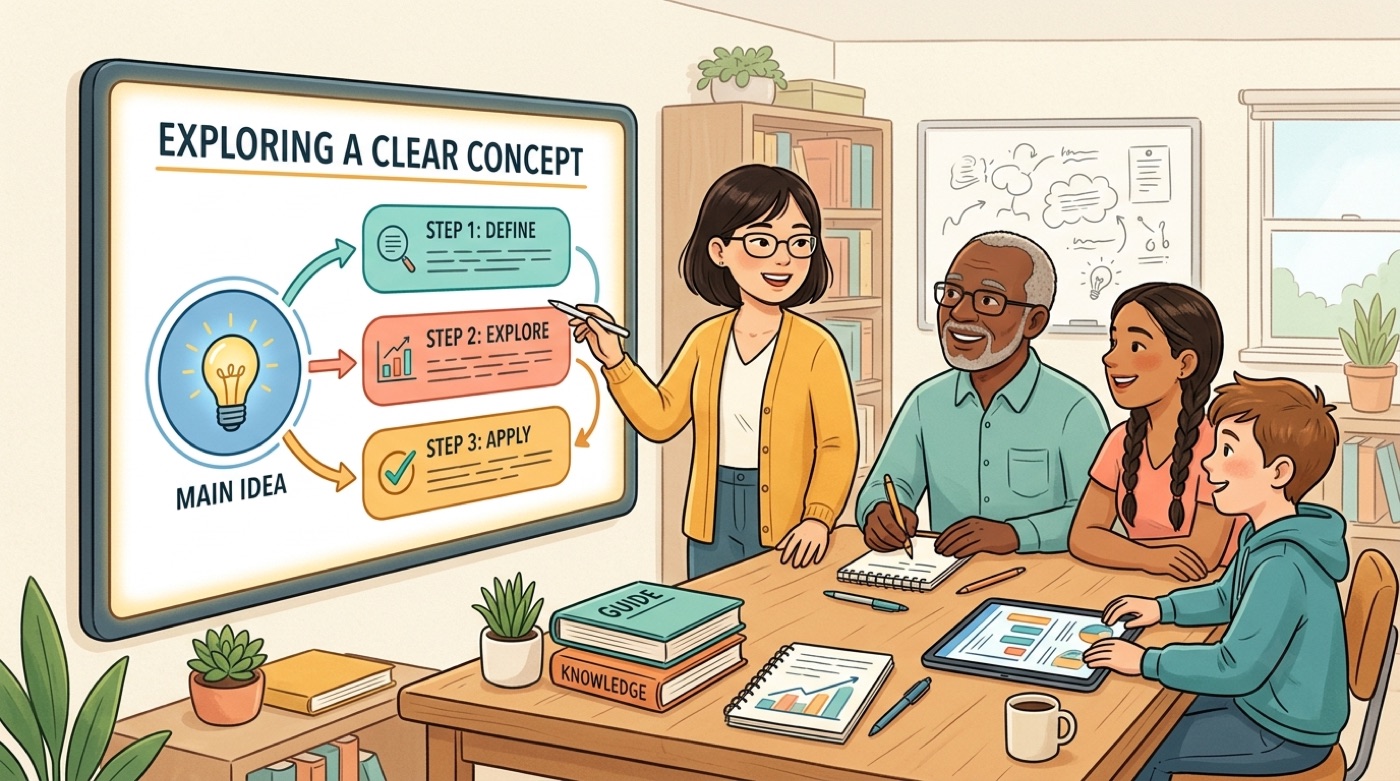
Most AI tutoring platforms follow the same underlying loop, regardless of subject or interface. It typically runs in four stages:
- Assess what you already know through a few diagnostic questions or your first response.
- Build an adaptive learning path matched to your current level and goal.
- Give instant feedback as you work through problems or explanations.
- Track progress and adjust difficulty or pacing over time.
This loop is what allows an AI tutor online to feel personalized instead of generic — the same question from two different students can trigger two different explanations, depending on what each one already understands.
Teaching by asking, not telling
The best AI tutors use a Socratic style: they ask guiding questions and scaffold your thinking instead of handing over the answer outright. Harvard Business Publishing, describing how to design an effective AI tutoring exercise, explains that the system should be prompted so the AI plays the role of an encouraging guide rather than an answer key.
The AI should act as “an upbeat, encouraging tutor” that asks students questions and helps them work through a problem, rather than simply supplying the solution.
Harvard Business Publishing, “AI as Personal Tutor”
That single design choice is what turns homework help into actual learning instead of a shortcut. Tutor.com’s Ask LEO is built around the same idea — a Socratic-minded assistant that asks questions rather than just giving answers.

AI Tutor for Homework Help
Step-by-step, not just the answer. An AI tutor is most useful on homework when it walks you through the reasoning line by line — for example, isolating a variable in an algebra equation, or outlining the structure of an essay — so you can solve the next similar problem on your own. Khan Academy frames its Khanmigo tutor as a way to turn homework into a moment of understanding rather than a race to a finished answer, and other tools bundle a homework helper with a content summarizer and course generator.
Subjects it covers. An AI tutor typically works across a wide spread of school and college material, including:
- Math, from arithmetic through calculus
- Science (biology, chemistry, physics)
- Reading, writing, and essay structure
- History and social studies
- World languages
- Coding and computer science
It can explain a single confusing concept in five minutes or coach you through an entire unit over several sessions.
Practice, Quizzes, and Test Prep
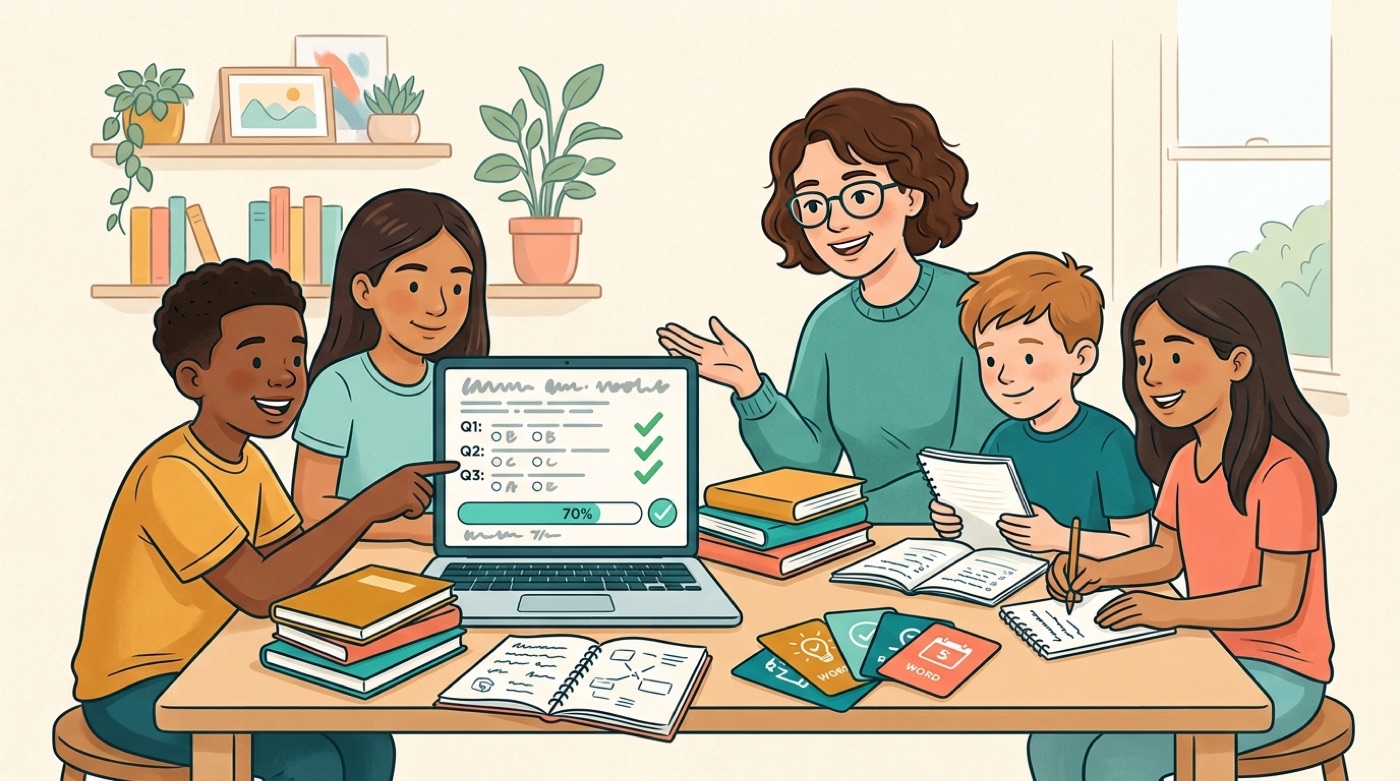
Beyond explanations, AI tutors generate practice problems, quizzes, and flashcards, then give instant feedback on each attempt — a well-established way to move information into long-term memory through active recall rather than passive re-reading. Some platforms also include a quiz and flashcard generator built directly into the chat, and Khanmigo offers dedicated SAT practice with worked feedback.
Many AI tutoring tools also help build a weekly study plan, breaking a large goal — an exam, a certification, a language level — into smaller sessions and reminding you to keep pace with it. That planning layer is often what separates a tutor from a plain question-answering bot: it keeps track of where you left off and what to review next.

How Much Does an AI Tutor Cost? Free vs Paid
Many AI tutors offer a free tier alongside paid plans, and pricing is typically far below in-person tutoring rates.
| Free AI tutor | Paid AI tutor | Human tutor | |
|---|---|---|---|
| Typical cost | $0 | roughly $10-$30/month | roughly $25-$80/hour |
| Availability | 24/7 | 24/7 | scheduled sessions |
| Subject depth | basic to moderate | broader, with advanced models | depends on tutor’s expertise |
| Extra features | limited usage | essay review, document upload, higher limits | in-person rapport, accountability |
Some tools are fully free rather than freemium. Khanmigo for Teachers is offered at no cost in more than 180 countries, a program supported by Microsoft’s Azure OpenAI Service, while UC Berkeley’s open-source OATutor is released under an MIT license with free adaptive content for anyone to use or adapt. Paid tiers on commercial AI tutors usually unlock more subjects, higher usage limits, more capable underlying models, and features like essay review or document upload.
AI Tutor vs a Human Tutor
AI tutors are available around the clock, patient with repeated questions, and dramatically cheaper than in-person instruction. A study from UC Berkeley’s School of Education found that hints generated by ChatGPT produced learning gains that were statistically indistinguishable from hints written by human experts — a meaningful result for a technology this new.
| AI tutor | Human tutor | |
|---|---|---|
| Availability | 24/7, instant | scheduled, limited hours |
| Cost | free to ~$30/month | ~$25-$80/hour |
| Accuracy | can be wrong or outdated | generally reliable within expertise |
| Emotional support | limited | strong, builds rapport |
| Best for | practice, quick explanations, drills | complex, high-stakes, or emotional learning |
The catch is reliability. AI can give outdated information or confidently state something incorrect, and a beginner may not catch the error the way an experienced teacher would. Complex, high-stakes, or emotionally difficult learning situations still benefit from a human in the room. The realistic verdict: an AI tutor complements a teacher — it does not replace one.
Best AI Tutors and Examples
A few well-known examples show the range of what’s on the market:
- Khanmigo (Khan Academy) — a GPT-4-based tutor covering math, science, coding, and the humanities, rated 4 stars by Common Sense Media.
- Code.org AI Tutor — built on Gemini Flash 2.5 and GPT-4o Mini for students aged 13+ in grades 6-12, with safety moderation applied to every message.
- Tutor.com’s Ask LEO — a Socratic chatbot that never just hands over answers.
- Duolingo, Carnegie Learning — subject-specific tutors, each with generally favorable user ratings on independent review platforms.
- OATutor (UC Berkeley) — a free, open-source adaptive tutor built for research and classroom use.
How to Choose the Right AI Tutor
Weigh five things before committing to any AI tutor online, whether free or paid:
- Subject and level coverage — does it actually teach what you need, at your grade or skill level?
- Personalization — does it adapt difficulty and pacing, or repeat the same explanation regardless of your answers?
- Real user reviews — check independent review sites, not just the vendor’s own claims.
- Cost and accessibility — is the free tier usable, or does it push you toward a subscription immediately?
- Privacy — does the provider clearly state that student data isn’t used to train AI models?
Trustworthy providers such as Tutor.com and Code.org state clearly that student conversations are not used to train their underlying AI models, which is worth checking before you type in a school assignment.
Is Using an AI Tutor Cheating? Academic Integrity
Using an AI tutor to understand material, practice problems, and check your own reasoning is studying, and most schools encourage it. Submitting AI-generated work as your own, or using an AI tutor during a proctored test, usually violates a school’s academic-integrity policy. The line is simple: use it to learn, not to have graded work done for you, and follow your institution’s specific rules on AI use.
Frequently Asked Questions
- What is an AI tutor?
An AI tutor is an AI-powered learning assistant that explains concepts in plain language, helps you work through homework step by step, quizzes you for practice, and helps plan your studies. It is available 24/7 and adapts to your level.
- Is an AI tutor free?
You can start for free, 24/7. Extended features are offered by subscription — see the terms in the interface.
- Can an AI tutor help with homework without cheating?
Yes. A good AI tutor walks you through the reasoning so you understand it, rather than just handing over answers. Always follow your school’s academic-integrity rules and use it to learn, not to submit AI work as your own.
- What subjects can an AI tutor teach?
Math, science, reading and writing, history, languages, test prep, and more. It can explain a single concept or coach you through a whole topic across school, college, and adult learning.
- How accurate is an AI tutor?
AI can make mistakes, so verify important facts against reliable sources. Used well, it is a fast, patient way to understand material and practice.
- Can an AI tutor replace a human teacher?
No. It is a powerful practice-and-explanation tool available any time, but it does not replace a qualified teacher, classroom, or personalized human mentorship.